
An Educational Look at a Home-Service Restoration Business Model
Some home-service businesses are built around replacement.
Sir Grout is built around restoration.
The company provides specialized restoration and maintenance services for tile, grout, natural stone, pavers, cement, and other hard surfaces.
Its central value proposition is helping residential and commercial customers improve the appearance and extend the life of existing surfaces—often providing an alternative to more extensive replacement or remodeling.
From an ownership perspective, however, the services are only one part of the story.
Prospective owners should also understand how the business operates, how customers are acquired, what role the owner plays, how employees are used, what support the franchisor provides, and what factors may influence growth.
That is the purpose of this Brand Spotlight.

The Elevare Perspective
A Brand Spotlight is not a recommendation to buy a franchise.
It is an opportunity to examine how a real business model works and identify the questions a prospective owner should investigate before deciding whether further exploration makes sense.
What Does Sir Grout Do?
Sir Grout operates in the hard-surface restoration segment of the home-services industry.
Services may include restoration, cleaning, sealing, recoloring, repair, and maintenance involving surfaces such as:
- Tile
- Grout
- Natural stone
- Showers
- Floors
- Countertops
- Pavers
- Cement and other hard surfaces
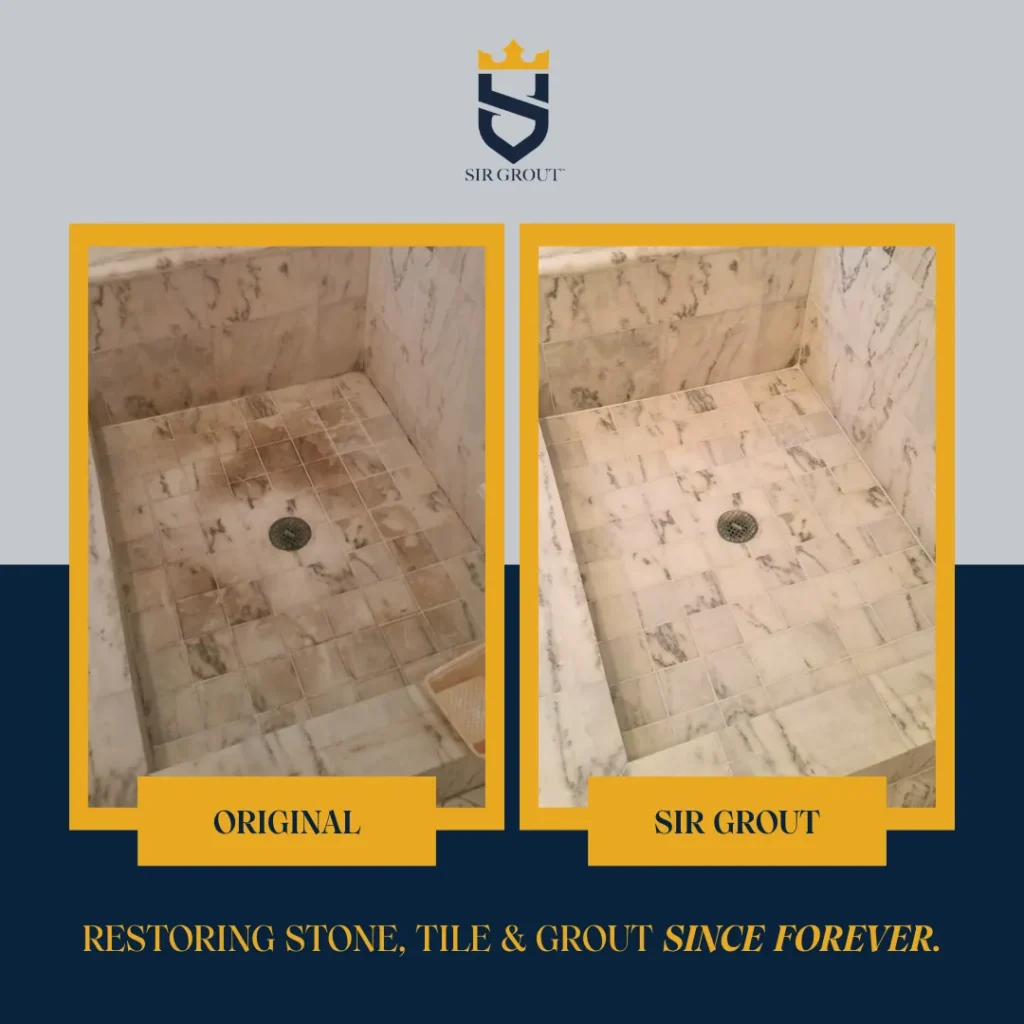
Instead of automatically replacing an aging or unattractive surface, the customer may have an opportunity to restore what is already there.
That creates a different customer value proposition from businesses centered primarily on demolition, replacement, or major remodeling.
The Customer Problem
Hard surfaces can deteriorate visually and functionally over time.
Customers may experience:
- Discolored grout
- Stains
- Worn or damaged surfaces
- Mildew or difficult-to-clean areas
- Deteriorated sealants
- Cracked or aging grout
- Stone that has lost its original appearance
The customer may initially believe replacement is the only solution.
A restoration business creates another option:
Why the Business Model Is Worth Studying
Sir Grout provides a useful example of several characteristics that prospective owners may encounter in service-based franchise models.
- Home-based, mobile operations
- No traditional retail storefront requirement
- Residential and commercial customers
- Multiple restoration and maintenance services
- Proprietary products and processes
- Franchisor-provided operating systems
- Centralized support resources
- The ability to build a technician-based organization
Those characteristics can affect startup complexity, overhead, staffing, owner responsibilities, and growth potential.
They are also examples of the factors discussed in our guide to what makes a strong business model.
A Home-Based, Mobile Operating Model
Sir Grout does not rely on customers visiting a conventional retail location.
Services are performed at the customer’s property.
That can eliminate several requirements associated with a traditional storefront, such as:
- Retail buildout
- Walk-in customer traffic
- Large customer-facing facilities
- Traditional retail merchandising
However, eliminating a storefront does not eliminate operational complexity.
A mobile service business still needs systems for:
- Lead generation
- Scheduling
- Estimating
- Route coordination
- Customer communication
- Technician management
- Inventory and supplies
- Quality control
- Follow-up and reviews
The Elevare Perspective
Lower facility requirements do not necessarily mean a simpler business.
The complexity often moves from managing a location to managing people, schedules, customers, vehicles, and service quality across the market.
Residential and Commercial Customers
The business can potentially serve more than one customer segment.
Residential customers may need restoration or maintenance in areas such as:
- Bathrooms
- Kitchens
- Floors
- Showers
- Countertops
- Outdoor hard surfaces
Commercial opportunities may involve businesses or properties with hard surfaces requiring restoration or ongoing maintenance.
Having multiple customer segments can create opportunity, but the sales approach may differ.
Residential work may rely more heavily on consumer marketing, online search, reviews, and referrals.
Commercial development may involve relationship building, networking, property-management relationships, and longer sales cycles.
How Customers Are Acquired Matters
A home-service business depends on a consistent flow of local customer opportunities.
Prospective owners should investigate how the system generates demand and how much responsibility remains with the local owner.
Questions may include:
- How are leads generated?
- Which marketing channels produce the most business?
- How much local marketing is expected?
- How important are online reviews?
- How much business comes from repeat customers?
- How important are referrals?
- Are commercial relationships an important growth channel?
- What customer-acquisition costs should an owner expect?
The Owner Role
One of the more important questions for any prospective franchisee is:
Sir Grout can potentially support different owner structures depending on the market, staffing, capitalization, and development of the business.
Owner-Operator
An owner-operator may participate more directly in activities such as:
- Customer estimates
- Sales
- Customer service
- Scheduling
- Field operations
- Technician oversight
- Local marketing
- Business administration
Executive Owner
An executive-style owner may focus more heavily on:
- Business development
- Sales management
- Hiring
- Team leadership
- Financial management
- Marketing strategy
- Community relationships
- Growth planning
Technicians or other employees may handle more of the direct service work.
Manager-Led Structure
A more manager-led structure may become possible when sufficient business volume, staffing, systems, and financial resources exist to support management.
That does not mean the business becomes passive.
The owner may still remain responsible for leadership, financial oversight, hiring decisions, performance management, and strategic direction.
Owner Model vs. Owner Reality
A franchise may support more than one ownership model.
That does not mean every new owner can immediately operate in the role they ultimately want.
Prospective owners should understand what the owner’s role looks like at launch, during ramp-up, and after the business reaches greater scale.
The Elevare Owner Role Framework
What does the owner personally need to do to establish the business?
Which responsibilities can gradually be delegated as revenue and staffing develop?
What role can the owner realistically occupy once the business reaches sufficient scale?
The ownership model advertised by a franchise should be compared with the actual path required to reach that model.
Training and Initial Support
Sir Grout provides structured training intended to prepare franchisees for both the technical and business sides of the model.
Based on information provided by the brand, initial training includes both headquarters training and in-market support.
Training topics may include:
- Technical restoration processes
- Products and applications
- Sales
- Estimating
- Operations
- Technology
- Customer service
- Business processes
The brand also provides a structured Right-Start program that combines technical education with sales and operating preparation.
For someone without a background in grout, tile, or stone restoration, this type of training infrastructure is particularly important to evaluate.
Technical Experience Is Not the Same as Ownership Experience
A prospective owner does not necessarily need to begin as an expert in hard-surface restoration.
The franchise system is designed to provide technical training and processes.
But that does not remove the need for business capabilities.
Depending on the owner model, success may require strengths in:
- Leadership
- Sales
- Customer service
- Hiring
- Financial management
- Marketing
- Accountability
- Problem solving
The Elevare Perspective
A franchise can teach a system.
The prospective owner still needs to determine whether their strengths, interests, and leadership style fit the responsibilities required to run that system.
Systems and Technology
One reason someone may choose a franchise rather than developing an independent business is access to established systems.
Sir Grout provides systems intended to support areas such as:
- Scheduling
- Customer management
- Inventory
- Operating processes
- Sales
- Marketing
The existence of technology is helpful, but prospective owners should evaluate how those systems are actually used.
Questions might include:
- Which systems are mandatory?
- How well do they integrate?
- What reporting does the owner receive?
- What systems support technicians in the field?
- How does technology affect scheduling efficiency?
- Which costs are included and which are additional?
Centralized Support
The brand provides resources intended to support franchisees beyond initial training.
One example is national call-center support.
Centralized customer-contact resources can potentially help with:
- Lead response
- Customer communication
- Scheduling support
- Consistency
Prospective owners should understand exactly which responsibilities are handled centrally and which remain local.
Proprietary Products and Processes
Sir Grout uses proprietary products and defined service processes as part of its operating system.
From an evaluation standpoint, proprietary systems can potentially create:
- Service consistency
- Brand differentiation
- Defined operating procedures
- Training standardization
Prospective owners should also understand:
- Product sourcing requirements
- Product costs
- Supply availability
- Required vendors
- How proprietary products affect margins
Staffing and Delegation
The ability to move from doing the work to managing the business often depends on staffing.
Technicians can potentially allow the owner to spend more time on:
- Sales
- Marketing
- Recruiting
- Financial management
- Business development
- Growth
But employees also introduce additional complexity.
Prospective owners should investigate:
- How difficult technicians are to recruit
- Training time
- Compensation structure
- Employee retention
- Productivity expectations
- Quality-control systems
- How many technicians are typically needed at different revenue levels
Scalability
A service business becomes more scalable when revenue growth does not depend entirely on the owner personally performing every service.
In the Sir Grout model, potential growth may come from:
- Increasing lead volume
- Improving sales conversion
- Adding technicians
- Expanding service capacity
- Developing commercial relationships
- Increasing repeat and referral business
- Expanding within the available territory where appropriate
That does not make growth automatic.
Growth typically creates additional demands involving:
- Hiring
- Training
- Vehicles
- Equipment
- Working capital
- Management
- Quality control

Capital Considerations
A prospective owner should evaluate more than the amount required to launch the franchise.
The complete capitalization picture may include:
- Franchise and startup costs
- Equipment
- Vehicles
- Initial marketing
- Insurance
- Training-related costs
- Business working capital
- Personal reserves
- Contingency capital
Our guide to the total capital requirement for business ownership explains why the startup number alone may not represent the complete financial requirement.
Prospective owners should also evaluate how the business may be funded only after understanding the complete capital need.
The Elevare Perspective
The question is not simply whether you have enough capital to open the business.
It is whether the business and household are appropriately capitalized for the ownership transition that follows.
Working Capital Still Matters in a Home-Based Business
A home-based model may reduce certain fixed costs, but it does not eliminate the need for operating capital.
The business may need funds for payroll, marketing, vehicles, fuel, products and supplies, insurance, technology, and other operating costs while customer demand and cash flow develop.
That makes working-capital planning part of the evaluation even when a traditional storefront is not required.
What Might Appeal to a Prospective Owner?
Characteristics that may be worth further investigation include:
- A home-based operating model
- A mobile service structure
- Residential and commercial customer potential
- Defined technical processes
- Training for owners without prior restoration experience
- Multiple owner-role possibilities
- The ability to build a technician-based organization
- Franchise systems and support
Whether those characteristics are attractive depends on the individual.
What Should a Prospective Owner Investigate?
A Brand Spotlight should create questions, not eliminate them.
Areas worth investigating include:
- Local customer demand
- Competition
- Lead generation
- Customer-acquisition cost
- Average transaction size
- Repeat and referral business
- Gross margins
- Technician recruiting
- Technician productivity
- Owner involvement
- Local marketing requirements
- Working-capital needs
- Territory characteristics
- Commercial-account development
- Franchisee satisfaction
Questions to Ask Existing Sir Grout Franchise Owners
Validation conversations can help prospective owners understand how the model operates outside the presentation environment.
Useful questions may include:
- What did your first year actually look like?
- How closely did startup costs match your expectations?
- Did you have enough working capital?
- How long did it take to build consistent lead flow?
- Which marketing channels work best in your market?
- How difficult has technician recruiting been?
- What does your personal owner role look like today?
- How has that role changed since launch?
- Which parts of the franchisor support are most valuable?
- What surprised you after opening?
- What would you do differently if you started again?
Our guide to questions to ask franchise owners during validation provides a broader framework for these conversations.
The Elevare Business Model Lens
| Evaluation Area | Questions to Explore |
|---|---|
| Customer Demand | How much demand exists for hard-surface restoration in the local market? |
| Customer Profile | What mix of residential and commercial customers supports the business? |
| Revenue Model | What services drive revenue, and what opportunities exist for repeat or recurring work? |
| Customer Acquisition | How are leads generated, and what does it cost to acquire customers? |
| Systems | How effectively do franchisor systems support sales, scheduling, operations, and service delivery? |
| Staffing | How difficult is it to recruit, train, manage, and retain technicians? |
| Owner Role | What does the owner actually do at launch, during growth, and in a mature operation? |
| Capital | What startup capital, working capital, personal reserves, and contingency resources are required? |
| Scalability | Can revenue grow through additional employees and service capacity without requiring the owner to personally perform every job? |
| Personal Alignment | Does the business fit the prospective owner’s strengths, goals, desired lifestyle, and preferred level of involvement? |
Sir Grout and Personal Fit
Even a well-structured business model is not automatically a good fit for every prospective owner.
Someone evaluating Sir Grout should consider whether they are comfortable with:
- Operating a local service business
- Managing employees or technicians
- Customer-facing sales
- Local marketing
- Handling customer-service issues
- Managing schedules and field operations
- Building referral and community relationships
- Developing a business over time rather than expecting immediate passive income
Our business ownership self-assessment explores why the individual should be evaluated before the opportunity.
Due Diligence Still Comes Before the Decision
Information from the franchisor is the beginning of the evaluation—not the end.
Prospective franchisees should independently investigate areas such as:
- The Franchise Disclosure Document
- Startup costs
- Financial assumptions
- Local market conditions
- Franchisee experiences
- Legal obligations
- Owner responsibilities
- Capital requirements
- Personal fit
Our cornerstone guide to business ownership due diligence provides a structured framework for that process.
The Elevare Perspective on Sir Grout
Sir Grout is an example of a home-service model that combines specialized technical services with a mobile operating structure and the potential to build a technician-based organization.
Characteristics such as a home-based model, defined systems, training, residential and commercial customer opportunities, and multiple potential owner roles may warrant further investigation depending on the prospective owner’s priorities.
But the important question is not:
A more useful question is:
That answer requires individual evaluation and due diligence.
Key Takeaways
- Sir Grout operates in the hard-surface restoration and maintenance segment of home services.
- The business uses a home-based, mobile service model rather than a traditional retail storefront.
- Residential and commercial customers may provide different revenue-development opportunities.
- The franchise provides technical, sales, operating, and systems training.
- The model can potentially support owner-operator, executive-owner, and more manager-led structures as the business develops.
- The actual owner role may change substantially between launch and a mature operation.
- Technician recruiting, training, management, and quality control are important areas to investigate.
- Customer acquisition and local marketing remain critical even with franchisor support.
- A home-based model does not eliminate the need for working capital.
- Startup investment should be evaluated within the broader total capital requirement.
- Validation conversations with existing franchise owners are an important part of the evaluation.
- Brand quality and personal fit are separate questions.
Frequently Asked Questions About the Sir Grout Franchise Model
What type of business is Sir Grout?
Sir Grout is a home-service franchise specializing in restoration and maintenance services for tile, grout, natural stone, pavers, cement, and other hard surfaces.
Does Sir Grout require a retail storefront?
The business is generally structured as a home-based, mobile service operation rather than a traditional customer-facing retail location. Prospective franchisees should confirm current operating and territory requirements directly with the franchisor.
Do Sir Grout owners need prior tile or restoration experience?
The franchise provides technical and operational training. Prospective owners should still evaluate whether their leadership, sales, customer-service, management, and business-development abilities align with the role they expect to perform.
Can Sir Grout be operated with employees?
The business can use technicians and other employees to perform service and operating responsibilities. The appropriate staffing structure depends on business volume, owner role, market conditions, and available capital.
Can Sir Grout support an executive-style owner?
The model may support an executive-style ownership approach in which the owner focuses more heavily on leadership, sales, hiring, financial management, marketing, and growth while employees perform more of the field work. Prospective owners should understand what level of involvement is realistically required at each stage of development.
Is Sir Grout a semi-absentee franchise?
The amount of owner involvement can depend on the staffing structure, business volume, management team, market, and stage of development. Prospective owners should investigate the actual hours and responsibilities of existing owners rather than relying solely on an ownership-model label.
How should someone evaluate a Sir Grout franchise?
Evaluation should include the Franchise Disclosure Document, local market, customer demand, owner role, staffing, customer acquisition, startup and working-capital requirements, franchisee validation, professional review, and personal alignment with the business model.
Does Elevare Advisory Group recommend Sir Grout?
Elevare Advisory Group helps prospective owners evaluate franchise and business opportunity models based on their individual goals, strengths, financial capacity, desired involvement, lifestyle, and other considerations. A Brand Spotlight is educational and should not be interpreted as a recommendation that a particular business is appropriate for every prospective owner.
Continue Your Learning
A Brand Spotlight is most useful when the specific opportunity is evaluated within a broader business ownership framework.
What Makes a Strong Business Model?
Learn how to evaluate customer demand, revenue, margins, systems, staffing, scalability, owner dependence, and other characteristics across business opportunities.
Business Ownership Self-Assessment: Know Your Fit
Evaluate your goals, strengths, lifestyle, desired owner role, risk tolerance, and financial capacity before evaluating individual brands.
Franchise vs. Business Opportunity: Key Differences
Understand how a franchise structure differs from other defined business opportunities and what those differences may mean for the owner.
Total Capital Requirement for Business Ownership
Look beyond the startup cost and consider business working capital, personal reserves, and contingency capital as part of the complete ownership plan.
Franchise Validation: Questions to Ask Existing Franchise Owners
Use validation conversations to test assumptions about startup, support, staffing, owner role, financial realities, and franchisee satisfaction.
Business Ownership Due Diligence: What to Evaluate
Bring the business model, finances, legal obligations, validation, operations, and personal fit together before making a decision.
This Brand Spotlight is provided solely for general educational purposes and is not an endorsement, recommendation, offer, solicitation, or representation that Sir Grout or any other franchise is appropriate for a particular individual. Information about franchise systems, services, training, support, ownership models, costs, financial requirements, territory availability, and operating practices may change and should be independently verified with the franchisor and the current Franchise Disclosure Document. Prospective franchisees should conduct their own due diligence, speak with existing franchise owners, review all applicable franchise documents, evaluate their personal and financial circumstances, and consult qualified legal, tax, accounting, lending, financial, and other professionals before making an ownership decision. Elevare Advisory Group provides education and strategic guidance to help individuals evaluate business ownership opportunities and may receive compensation from a franchisor or business opportunity provider if a client ultimately proceeds with an opportunity. There is no fee charged to clients for Elevare Advisory Group’s advisory services.