
An Educational Look at a Membership-Based Dog Wellness Business Model
Recurring revenue is attractive because it can create greater visibility into future customer activity.
But every recurring payment can also create a recurring obligation.
Scenthound provides a useful example.
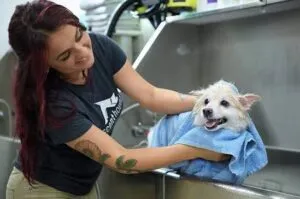
The company focuses on routine hygiene and wellness care for dogs, using memberships to encourage customers to make services such as bathing, nail care, ear cleaning, and teeth brushing part of an ongoing routine rather than an occasional visit.
From a business-model perspective, however, the membership is only the beginning.
Each active member creates future demand that must be supported by employees, appointment capacity, equipment, operating systems, customer service, and a physical location capable of safely serving dogs throughout the day.
That makes Scenthound more than a pet-care concept.
It combines elements of a membership business, a labor-based service operation, a specialized retail location, and a technology-enabled customer experience.
That is the purpose of this Brand Spotlight: to examine how those pieces work together and identify what a prospective owner should investigate before deciding whether the model deserves further consideration.
The Elevare Perspective
Recurring revenue improves visibility only when the business can fulfill the recurring promise.
Membership count, customer retention, labor capacity, appointment availability, and customer experience should be evaluated together.
What Does Scenthound Do?
Scenthound positions its core offering around routine hygiene and wellness care for dogs rather than traditional haircut-centered grooming alone.
Core services may include:
- Bathing
- Ear cleaning
- Nail trimming
- Teeth brushing
- Coat care
Additional services may include:
- Haircuts
- Blow-drying
- Conditioning treatments
- Shedding treatments
- Other hygiene or grooming-related services
The distinction matters because not every dog requires regular haircuts.
Most dogs, however, need some combination of bathing, nail care, ear care, teeth care, or coat maintenance.
The business therefore seeks to make routine hygiene relevant to a broader population of dog owners.
The S.C.E.N.T. Check
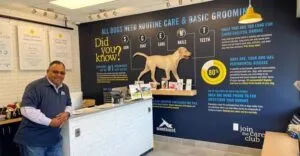
Scenthound incorporates a standardized external observation process called the S.C.E.N.T. Check into the customer experience.
The process focuses on areas such as:
- Skin
- Coat
- Ears
- Nails
- Teeth
- Glands
Employees document external observations as part of the visit.
If something appears concerning, the pet parent may be encouraged to seek appropriate veterinary attention.
The S.C.E.N.T. Check is not a veterinary diagnosis.
The Membership Model
Traditional grooming can be episodic.
A customer may schedule an appointment when the dog visibly needs a bath, haircut, nail trim, or other service.
A membership model attempts to change that behavior by encouraging more consistent routine care.
For the customer, that may create:
- A regular hygiene routine
- Predictable monthly pricing
- Regular interaction with the business
- A documented history of visits and observations
For the business, memberships may provide:
- Greater visibility into future customer demand
- Recurring monthly billing
- More frequent customer relationships
- Opportunities for additional services and products
Those benefits depend on customers continuing to perceive enough value to remain members.
A Membership Creates Revenue and an Obligation
It is easy to view recurring revenue only from the financial side.
Operationally, every active member also creates future work.
The business must have enough:
- Employees
- Appointment availability
- Bathing and service capacity
- Equipment
- Operating hours
- Management oversight
to serve the membership base consistently.
If membership growth outpaces staffing or physical capacity, customers may have difficulty booking appointments or service quality may decline.
If labor grows too far ahead of demand, payroll can pressure cash flow.
The Other Side of Recurring Revenue
More members can mean more recurring revenue.
They can also mean more recurring labor, scheduling, equipment use, supplies, customer communication, and management responsibility.
Three Revenue Levers
The business model can generate revenue from more than one source.
Broadly, those sources include:
- Memberships — recurring routine hygiene services
- Add-on services — additional grooming, treatment, or care options purchased during visits
- Retail products — pet-care products available through the business
Prospective owners should investigate not only how much revenue comes from each source, but the gross margin, labor requirement, customer behavior, and operating capacity associated with each.
Member Count Alone Does Not Tell the Whole Story
Two locations can have similar membership counts and still produce very different economic results.
A more complete evaluation should consider:
- Membership pricing
- Member retention
- Cancellation patterns
- Service utilization
- Add-on purchases
- Retail sales
- Labor productivity
- Appointment capacity
- Operating hours
- Occupancy expense
The Elevare Perspective
Recurring billing and recurring profitability are not the same thing.
The economics depend on what it costs to acquire, retain, and serve the customer over time.
A Compact Retail Footprint Still Requires Specialized Development
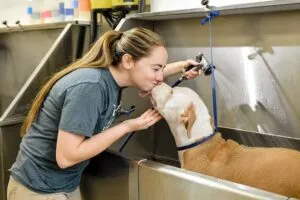
Scenthound operates from physical locations rather than a home-based or mobile service model.
A location may need to support:
- Customer check-in and pickup
- Bathing stations
- Service and grooming areas
- Kennels or dog-holding areas
- Employee work areas
- Equipment and supplies
That makes the buildout more specialized than an ordinary office or simple retail storefront.
Development considerations may include:
- Plumbing
- Drainage
- Waterproofing
- Ventilation
- Electrical capacity
- Sound management
- Equipment placement
- Animal flow
- Safety
- Permitting and inspections
Prospective owners should investigate realistic timelines for site selection, lease negotiation, permitting, construction, inspections, presales, and opening.
Staffing Determines Service Capacity
Membership growth cannot be separated from labor.
The location needs employees who can:
- Work safely with dogs
- Follow standardized procedures
- Provide consistent service
- Communicate with pet parents
- Maintain a clean facility
- Work efficiently within scheduled appointment times
Some roles and services require greater skill and training than others.
That makes recruiting, employee development, scheduling, retention, and cross-training important components of the operating model.
Pet Care Adds a Different Form of Operating Risk
This is not simply a labor-intensive retail business.
Employees work with animals of different sizes, temperaments, ages, and physical conditions.
Dogs may become anxious, resist handling, react to another animal, or create risk for employees.
Prospective owners should understand how the system addresses:
- Employee training
- Animal handling
- Dog separation
- Incident reporting
- Facility monitoring
- Workers compensation
- Liability insurance
- Customer communication following an incident
The Elevare Perspective
Staffing affects more than payroll.
In a pet-care business, employee quality can affect capacity, customer experience, safety, reputation, and financial performance at the same time.
Technology Supports Both Customers and Owners
Technology is an important part of the Scenthound operating model.
Customer-facing technology is designed to support activities such as:
- Appointment booking and management
- Access to S.C.E.N.T. Check information
- Wellness-history tracking
- Customer communication
- Referral activity
Franchisee technology is designed to provide visibility into areas such as:
- Appointments
- Employee scheduling
- Membership activity
- Revenue
- Operating performance
- Key performance indicators
That information can help an owner identify variances and operating issues earlier.
But a dashboard cannot solve the problem by itself.
Technology Creates Visibility
Data may show that appointments are running long, memberships are cancelling, payments are failing, or staffing does not match demand.
Management still has to determine why and take action.
Local Marketing Still Matters
A franchise system can provide brand resources, technology, marketing tools, and operating guidance.
A new local business still needs customers.
Owners may need to develop awareness through:
- Digital marketing
- Community events
- Local partnerships
- Apartment communities
- Rescue organizations
- Pet-related businesses
- Veterinary relationships where appropriate
- Referral activity
Marketing should be evaluated as more than lead generation.
The more useful funnel is:
What Does the Owner Actually Do?
The customer sees dogs receiving care.
The owner sees a much broader operating system.
Ownership responsibilities may include:
- Membership growth
- Marketing
- Hiring
- Employee development
- Payroll management
- Scheduling and capacity
- Financial review
- Customer concerns
- Safety
- Facility standards
- Manager accountability
- Community relationships
Owner-Operator
An owner-operator may serve as the location manager or work closely with the management team.
The owner may personally lead:
- Hiring
- Scheduling
- Payroll
- Local marketing
- Membership growth
- Customer communication
- Daily problem solving
This can give the owner direct visibility into the operation while also requiring substantial personal involvement.
Manager-Led Owner
In a manager-led structure, a manager handles more of the day-to-day activity.
The owner may focus more heavily on:
- Manager selection and coaching
- Financial performance
- Membership growth
- Marketing performance
- Staffing standards
- Franchisor communication
- Strategic decisions
That should not be confused with passive ownership.
The owner still retains responsibility for the people, capital, standards, strategy, and results.
Manager-Led Does Not Mean Passive
Delegating daily operations changes the owner’s work.
It does not eliminate ownership responsibility.
Prospective owners should understand the management structure, revenue, staffing depth, and capital required before assuming the business can operate effectively without their daily presence.
The Elevare Owner Role Framework
What must the owner personally do during real estate, hiring, presales, construction, and opening?
How much involvement is required while the member base, team, and operating rhythm develop?
What management structure is required for the owner to operate more strategically?
The ownership model should be evaluated as a progression rather than simply as a label.
The Economics Differ From a Digital Subscription
A software subscription can sometimes add customers with relatively little additional labor.
A dog-wellness membership is different.
Each additional active member can create demand for:
- Employee time
- Bathing capacity
- Service appointments
- Supplies
- Cleaning
- Equipment usage
- Customer communication
- Management oversight
Growth therefore needs to be evaluated together with labor productivity and physical capacity.
Scalability Comes From Replicating the Operating System
A single location has finite capacity.
Growth within that location may come from:
- Increasing membership
- Improving retention
- Adding employee capacity
- Increasing appointment utilization
- Expanding operating hours where appropriate
- Increasing add-on services
- Growing retail sales
Multi-unit development creates another potential form of scale.
But an additional location also introduces:
- Another lease
- Another buildout
- Another employee team
- Additional management
- Additional working capital
- Another local customer-acquisition challenge
Multi-unit growth should therefore be evaluated as an additional capital and management decision rather than simply more revenue opportunity.
Capital Considerations
A physical-location business requires prospective owners to think beyond the franchise fee or published startup estimate.
The complete capitalization picture may need to include:
- Franchise and startup expenses
- Lease deposits
- Design and construction
- Permitting
- Equipment
- Technology
- Presale marketing
- Recruiting and training
- Opening payroll
- Insurance
- Business working capital
- Personal reserves
- Contingency capital
Real-estate or construction delays can extend the period between committing capital and generating operating revenue.
A manager-led owner may also incur management payroll before membership revenue reaches a mature level.
That is why the total capital requirement for business ownership is more useful than looking only at the opening investment.
Working Capital Is Particularly Important During Membership Ramp-Up
A new location begins incurring expenses before it has a mature customer base.
Those expenses may include:
- Rent
- Payroll
- Marketing
- Insurance
- Utilities
- Supplies
- Technology
- Debt service where applicable
- Other operating costs
while memberships are still being acquired and retained.
Our guide to understanding working capital explains why the operating runway should be evaluated separately from the initial investment.
The Elevare Perspective
A growing member base can improve revenue visibility without eliminating the need for financial runway.
Payroll, rent, marketing, and other expenses continue while the customer base develops.
Who Might Be Well Suited to the Model?
Prior pet-industry experience is not necessarily the most important consideration.
More relevant strengths may include:
- Leadership experience
- Recruiting and employee development
- Financial discipline
- Comfort using operating data
- Customer-service leadership
- Local networking
- Marketing accountability
- Patience with real estate and development
- Ability to follow established systems
- Comfort addressing staffing and operating problems
A personal affinity for dogs may strengthen someone’s connection to the mission.
It does not replace business leadership.
What May Make the Model a Poor Fit?
The model may deserve additional scrutiny for someone who:
- Is seeking passive income immediately
- Does not want to manage employees
- Is uncomfortable with animal-safety responsibilities
- Does not want lease or construction exposure
- Dislikes local consumer marketing
- Does not want to monitor operating metrics
- Has limited ability to support the business during management turnover or staffing gaps
Our business ownership self-assessment explores why the individual should be evaluated before the opportunity.
The Elevare Business Model Lens
| Evaluation Area | Questions to Explore |
|---|---|
| Customer Demand | Will enough local dog owners pay consistently for routine hygiene and wellness services? |
| Revenue Model | How do memberships, add-on services, and retail products contribute to unit economics? |
| Retention | How long do members stay, why do they cancel, and what drives ongoing value? |
| Capacity | How many members can the location serve safely and consistently with its current staffing and equipment? |
| Staffing | How difficult is it to recruit, train, schedule, develop, and retain employees? |
| Technology | What information does the owner receive, and how effectively can that data be used to manage performance? |
| Real Estate | What rent, construction, permitting, and development assumptions are required for the local market? |
| Owner Role | What does the owner actually do during development, launch, ramp-up, and a mature operation? |
| Capital | What startup capital, working capital, personal reserves, and contingency resources are required? |
| Personal Alignment | Does a labor-based, consumer-facing pet-service business fit the owner’s strengths, lifestyle, goals, and desired involvement? |
What Should a Prospective Owner Investigate?
A Brand Spotlight should create questions, not eliminate them.
Important areas to investigate include:
- Membership economics and retention
- Customer-acquisition cost
- Membership pricing
- Service utilization
- Add-on revenue
- Retail-product performance
- Labor productivity
- Staffing and turnover
- Animal-safety procedures
- Real-estate economics
- Construction and permitting timelines
- Presale expectations
- Technology and reporting
- Owner involvement
- Management coverage
- Working-capital needs
- Franchisee satisfaction
Questions to Ask Existing Scenthound Franchise Owners
Validation conversations can help determine how the business operates outside the presentation environment.
Useful questions may include:
- What did your first six months after opening actually look like?
- How long did site selection, permitting, construction, and inspections take?
- Which opening costs differed most from your original plan?
- Did you have enough working capital?
- How did your presale membership results compare with expectations?
- Which marketing channels produce members who stay?
- How quickly did membership growth require additional employees?
- Which positions are most difficult to recruit and retain?
- What happens operationally when a manager or experienced employee leaves?
- Which KPIs are most useful to you?
- How frequently do animal-handling incidents, customer complaints, or employee injuries occur?
- How useful was franchisor support during real estate, buildout, presales, and opening?
- What does your personal owner role look like today?
- How has your role changed since opening?
- If you were opening again, what would you change?
- What type of owner is most likely to struggle with this model?
- Knowing what you know now, would you make the same decision?
Our guide to questions to ask franchise owners during validation provides a broader framework for these conversations.
The Elevare Perspective
Validation is most useful when it tests a specific assumption.
Ask the same factual question of several owners, compare their answers, and investigate why their experiences differ.
Due Diligence Still Comes Before the Decision
Information from the franchisor is the beginning of the evaluation—not the end.
Prospective owners should independently review:
- The Franchise Disclosure Document
- Item 7 investment assumptions
- Item 19 financial performance information, if provided
- Local wages
- Local rent and real-estate costs
- Construction assumptions
- Customer demand
- Competitors and alternatives
- Franchisee experiences
- Owner responsibilities
- Capital requirements
- Personal fit
Our cornerstone guide to business ownership due diligence provides a structured framework for bringing those areas together.
The Elevare Perspective on Scenthound
Scenthound provides a useful example of how recurring revenue can change both the economics and operating requirements of a service business.
The membership structure may create greater visibility into future customer activity, while standardized services, technology, and a defined customer experience can help create consistency.
At the same time, the model requires a prospective owner to evaluate what supports the membership beneath the surface: customer acquisition, retention, appointment capacity, employee recruiting, animal safety, local marketing, facility management, cash flow, and active leadership.
The important question is not:
A more useful question is:
That answer requires individual evaluation and due diligence.
Key Takeaways
- Scenthound focuses on routine dog hygiene and wellness rather than traditional haircut-centered grooming alone.
- Memberships can improve revenue visibility but also create recurring service obligations.
- Member count should be evaluated together with retention, utilization, add-on sales, labor productivity, and appointment capacity.
- The business combines membership revenue, add-on services, and retail-product opportunities.
- A compact retail location still requires specialized plumbing, equipment, workflow, construction, and safety planning.
- Staffing affects service capacity, customer experience, safety, and financial performance.
- Technology can improve operating visibility but does not replace active management.
- A manager-led structure should not be confused with passive ownership.
- Local marketing remains important even with franchisor resources and brand support.
- The startup investment is only one component of the complete capital requirement.
- Franchisee validation should test assumptions about memberships, staffing, real estate, capital, management, support, and operating risk.
- The mission and customer proposition should reinforce business fit rather than replace it.
Frequently Asked Questions About the Scenthound Franchise Model
Is Scenthound a traditional dog grooming franchise?
Scenthound offers grooming-related services, but its primary positioning centers on routine hygiene and wellness care delivered through recurring memberships. Core services may include bathing, ear cleaning, nail trimming, teeth brushing, and coat care, while haircuts and other treatments may be available separately.
Does a membership model guarantee predictable profit?
No. A membership can improve revenue visibility, but profitability still depends on pricing, customer retention, service utilization, add-on purchases, labor productivity, occupancy costs, marketing, operating efficiency, and management.
Does Scenthound require previous pet-care experience?
The franchise system is designed to provide training and operating processes, and prior pet-industry experience is not necessarily required. The prospective owner should still evaluate whether their leadership, financial, staffing, customer-service, and management abilities fit the business.
Can Scenthound support a manager-led owner?
The model may support a manager-led structure in which a manager handles more of the daily location activity. The owner still retains responsibility for financial performance, manager leadership, staffing standards, marketing, franchisor communication, capital, and strategic decisions. It should not be viewed as passive ownership.
What role does technology play in the business?
Technology supports customer appointment management and wellness information as well as franchisee visibility into scheduling, staffing, membership activity, revenue, and operating performance. The usefulness of the technology depends on how consistently owners and managers use the information to make decisions.
Why is staffing especially important in this model?
Employees directly affect how many appointments the business can serve, the quality of the customer experience, labor costs, animal safety, and the ability to fulfill membership obligations. Recruiting, training, scheduling, and retention should therefore be central due-diligence topics.
What should someone review in Item 19?
Prospective franchisees should understand which locations and time periods are included, how memberships and revenue are defined, whether mature and newer locations are separated, which costs are included in any profitability presentation, and whether the financial information assumes a particular owner-management structure.
How should someone evaluate a Scenthound franchise?
Evaluation should include the Franchise Disclosure Document, local customer demand, membership economics, retention, staffing, service capacity, real estate, construction, technology, safety, owner role, capital needs, franchisee validation, professional review, and personal alignment with the business model.
Does Elevare Advisory Group recommend Scenthound?
Elevare Advisory Group helps prospective owners evaluate franchise and business opportunity models based on their individual goals, strengths, financial capacity, desired involvement, lifestyle, and other considerations. A Brand Spotlight is educational and should not be interpreted as a recommendation that a particular business is appropriate for every prospective owner.
Continue Your Learning
A Brand Spotlight is most useful when the specific opportunity is evaluated within a broader business ownership framework.
What Makes a Strong Business Model?
Learn how to evaluate customer demand, revenue, margins, systems, staffing, scalability, owner dependence, and other characteristics across business opportunities.
Business Ownership Self-Assessment: Know Your Fit
Evaluate your goals, strengths, lifestyle, desired owner role, risk tolerance, and financial capacity before evaluating individual brands.
Total Capital Requirement for Business Ownership
Look beyond startup cost and consider business working capital, personal reserves, and contingency capital as part of the complete ownership plan.
Understanding Working Capital for Business Owners
Understand why a developing membership base still requires enough operating capital to support payroll, rent, marketing, and other expenses.
Franchise Validation: Questions to Ask Existing Franchise Owners
Use validation conversations to test assumptions about startup, support, staffing, financial realities, owner role, and franchisee experience.
Business Ownership Due Diligence: What to Evaluate
Bring the business model, finances, legal obligations, validation, operations, and personal fit together before making a decision.
This Brand Spotlight is provided solely for general educational purposes and is not an endorsement, recommendation, offer, solicitation, or representation that Scenthound or any other franchise is appropriate for a particular individual. Information about franchise systems, memberships, products, services, training, technology, support, ownership models, costs, financial requirements, territory availability, real-estate requirements, operating practices, and financial performance may change and should be independently verified with the franchisor and the current Franchise Disclosure Document. Prospective franchisees should conduct their own due diligence, speak with existing franchise owners, review applicable franchise documents, conduct independent local-market and financial analysis, evaluate their personal and financial circumstances, and consult qualified legal, tax, accounting, lending, financial, and other professionals before making an ownership decision. Brand-provided images should be used only with appropriate permission. Elevare Advisory Group provides education and strategic guidance to help individuals evaluate business ownership opportunities and may receive compensation from a franchisor or business-opportunity provider if a client ultimately proceeds with an opportunity. There is no fee charged to clients for Elevare Advisory Group’s advisory services.